Table of Contents
If your air conditioner is on its last legs, you’re probably facing a bigger decision than choosing “which brand” to replace it with. You may be choosing between a traditional air conditioner system, or a heat pump system. A heat pump is an incredibly efficient system that is able to both cool and heat your home. Short answer: a heat pump usually wins if you are also needing to replace your furnace, since it does both jobs for close to the same total cost as buying two separate systems. A standalone AC still makes sense if your furnace is relatively new. Here’s the full comparison, cost by cost.
What’s the Difference Between a Heat Pump and an AC?
An air conditioner does one job: it cools your home. To heat your home, you still need a separate furnace or other heat source.
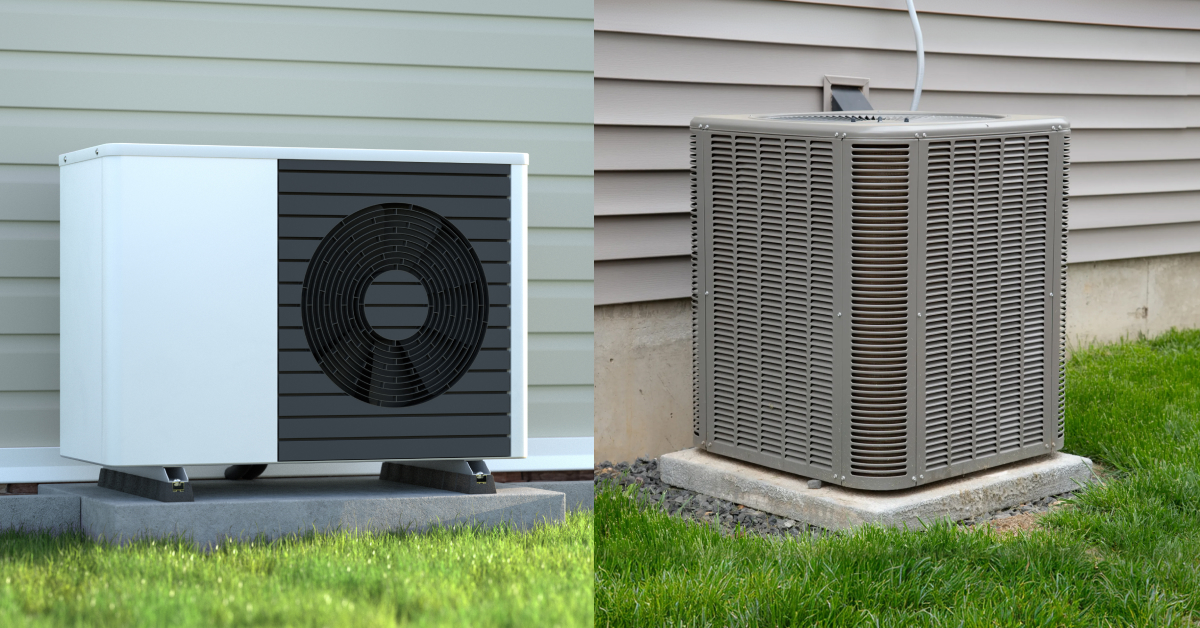
A heat pump does both. In summer, it works exactly like an air conditioner - pulling heat out of your home and moving it outside. In winter, it simply runs in reverse, pulling heat from the outside air and moving it indoors. The same core technology (a refrigeration cycle) is used for both systems.
Heat Pump vs. AC: Quick Comparison
|
Central AC |
Heat Pump |
|
|
Heats your home? |
No - needs a separate furnace |
Yes |
|
Cools your home? |
Yes |
Yes |
|
Installed cost |
$3,000 - $15,000 |
$6,000 - $25,000 |
|
Heating efficiency |
N/A (needs separate furnace) |
2-4x more efficient than furnaces or electric heat |
|
Typical lifespan |
15-20 years |
15-20 years |
|
Rebates/incentives |
Limited |
Various incentives available |
So, Which is Better, a Heat Pump or AC?
This will depend on your current situation and what you’re actually solving for.
A heat pump makes the most sense if:
- You’re also due for a furnace replacement, so you would be needing to purchase 2 new systems
- You live somewhere with mild to moderate winters
- You want to cut your home’s reliance on gas or oil heating
- You want access to electrification incentives and rebates
A standard AC (paired with your existing furnace) makes more sense if:
- You furnace is relatively new and still has years of life left
- Upfront cost is the deciding factor and you don’t need to replace both systems at once.
Heat Pump vs. AC: Cost Comparison
A heat pump typically costs more upfront than a standalone AC, but could actually be less than buying an AC and a furnace separately, especially once you account for rebates.
Central air conditioner (installed): roughly $3,000-$15,000+, with most homeowners paying somewhere around $,6,000-$7,500 for a straightforward replacement with existing ductwork in place.
Furnace: typically $3,800-$10,000, depending on size and efficiency
Heat pump (installed): roughly $6,000-$25,000 with most ducted, whole-home systems landing between $12,000 and $18,000 before any rebates.
Once you add furnace replacement cost to the AC, the gap between the two options narrows considerably, and a heat pump can come out ahead, especially if you qualify for state or utility rebates.
Heat Pump vs. AC: Monthly Operating Cost
Heat pumps typically cost less to run month-to-month than an AC plus furnace setup, mainly because of how much cheaper they are to heat with. In cooling mode, monthly costs are likely to be similar between the two systems, since they use the same refrigeration cycle. The difference shows up in winter because a heat pump is significantly more efficient than a furnace which is where most of the long-term utility savings come from. Actual monthly cost depends on your local electricity and gas rates, home size, insulation and climate.
Heat Pump vs. AC: Efficiency
In cooling mode, heat pumps and air conditioners are equally efficient - heat pumps only pull ahead once you factor in heating. They use the same refrigeration cycle and typically the same SEER2 efficiency ratings for cooling. Where heat pumps separate themselves is on the heating side: because they move heat rather than generate it, they can be roughly 2–4x more efficient than traditional heating methods like furnaces or electric resistance heat, and are cheaper to run as a result.
Pros and Cons of Air Conditioning
Pros:
- Lower upfront cost if your furnace is already in good condition
- Removes humidity and cools consistently through summer
- 15-20 year typical lifespan
- Simple, well understood technology with widely available service
Cons:
- Only cools - you would still require a separate heating system
- Fewer rebates and incentives available compared to heat pumps
- Two systems to maintain instead of one
Pros and Cons of Heat Pumps
Pros:
- Heats and cools with a single system
- Highly efficient, especially compared to electric or oil heat
- Lower long-term utility bills in most climates
- Qualifies for a range of state and utility incentives
- Lower lifetime carbon emissions
- Maintenance is minimal
- Better air quality (no combustion, so no risk of gas leaks)
Cons:
- Higher upfront cost than AC alone (though often comparable to AC + furnace combined purchase)
Why Heat Pumps Are Often The Better Solution
Heat pumps are considered the better solution for most homeowners due to their dual functionality. Investing in a heat pump means investing in one home improvement with a single system to monitor and maintain, instead of running separate air conditioning and furnace systems.
Heat pumps also win on efficiency - while air conditioning units and heat pumps perform almost identically when cooling, heat pumps are often 300–400% more efficient when heating.
In terms of cost, government incentives are widely available for heat pumps, so while the upfront price can be higher than a single AC unit, you're effectively getting cooling and heating for the price of one system.
FAQ's
Is a heat pump cheaper than AC in the long run?
Upfront, a heat pump typically costs more than a standalone AC unit. But because it replaces both your cooling and heating systems, and runs more efficiently in heating mode, homeowners are likely to see lower monthly utility bills over time - especially with running an AC alongside an older gas or oil furnace.
What’s the real difference between heat pump vs. AC and furnace?
An AC and furnace are two separate systems: one cools, one heats. A heat pump does both jobs with a single unit by reversing its refrigeration cycle. The fairer cost comparison inst heat pump vs. AC - it’s heat pump vs. (AC + furnace), since that’s what you’re really replacing.
Is a heat pump more efficient than an AC?
In cooling mode, they perform almost identically - both use the same refrigeration cycle and SEER2 ratings. The efficiency gap shows up in heating: heat pumps can be 2-4x more efficient than furnaces or electric resistance heat, since they move heat instead of generating it.
Does a heat pump work in cold climates?
Yes, modern heat pumps are designed to work in cold weather. They tend to make the most sense in mild-to-moderate winter climates. There are also cold climate heat pumps available designed to work in extreme temperatures.