What is a geothermal heat pump?
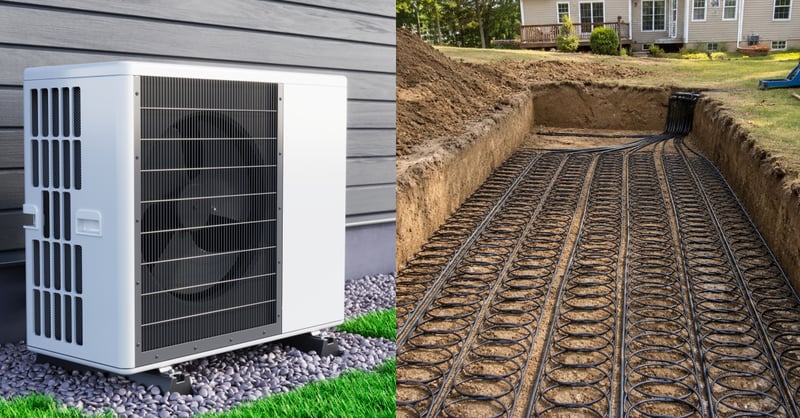
Geothermal heat pumps (GHPs), also known as ground source heat pumps, use the stable temperature of the earth (40°–70°F) to heat and cool your home year-round. Rather than generating heat by burning fuel, they move heat between your home and the ground using a network of underground pipes, called a ‘loop,’ making them one of the most energy-efficient home heating and cooling systems available.
How does a geothermal heat pump work?
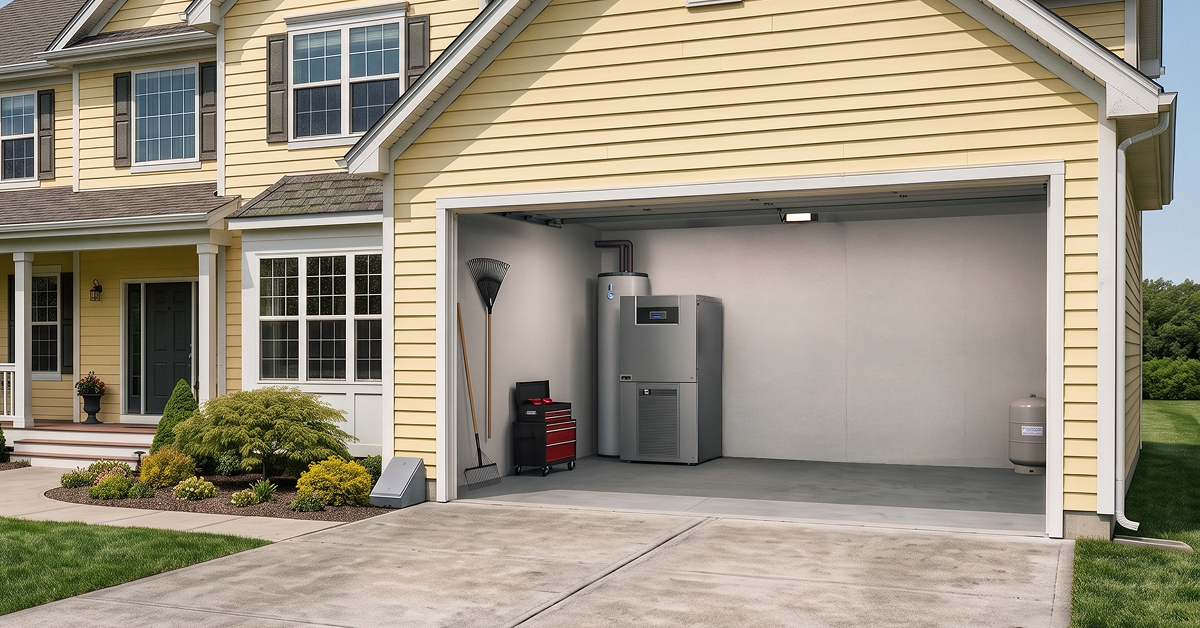
A geothermal heat pump circulates fluid through underground pipes. In winter, the fluid absorbs heat stored in the earth and carries it into your home. In summer, the process works in reverse - heat from inside your home is pushed back into the cooler ground, keeping your living spaces comfortable. A heat exchanger inside the unit manages this transfer between the fluid and your home's heating or cooling system.
Types of geothermal heat pump systems
The U.S. Department of Energy recognizes four main types of geothermal heat pump systems. Three are ‘closed-loop systems,’ and one is an ‘open-loop’ system. In a closed-loop system, a sealed water or water-glycol solution is circulated through underground or underwater pipes. With an open-loop system, water is drawn from groundwater.
Horizontal loop (closed-loop)
Best suited for homes with ample outdoor space, horizontal systems use two pipes buried in trenches at least four feet deep. They're typically the most cost-effective option for residential installations and are common in new construction where land is available.
Vertical loop (closed-loop)
Where outdoor space is limited, vertical systems are drilled 100–400 feet deep, requiring only a small surface footprint. Holes are drilled roughly 20 feet apart, with two pipes inserted and connected at the bottom via a U-bend - joining the two pipe legs into one continuous loop, allowing fluid to travel down one pipe, turn around at the bottom of the borehole, and return up the other. Because these systems reach deeper, they benefit from even more stable year-round temperatures. Vertical systems are frequently used in large commercial buildings and schools.
Pond/Lake loop (Closed-loop)
If your property sits near a body of surface water that meets the minimum volume, depth, and quality requirements, a pond or lake loop may be an option for you. A supply line runs underground from the building to the water, where it coils into circles to exchange heat.
Open loop
Open-loop systems draw directly from a clean, consistent groundwater source, rather than circulating a sealed fluid. These require access to a suitable well or surface water supply and are subject to local regulations.
.png?width=2784&height=1567&name=Geothermal%20heat%20pump%20(2).png)
Ground source heat pump installation: what to expect
Step 1: Home suitability assessment
Before anything else, the U.S. Department of Energy recommends consulting a geothermal designer or licensed engineer as opposed to connecting directly with a contractor. This assessment looks at your home's heat loss, insulation levels, and available land or water access.
Step 2: System design
The right system depends on your property and location. For example, Salt Lake County recommends closed-loop systems (vertical or horizontal) for most residential installations. A qualified designer will recommend the best configuration for your climate and lot.
Step 3: Installation
Geothermal installations are more extensive than standard HVAC work. Depending on the system type, installation includes drilling or trenching, permitting (requirements vary by state and municipality), and connecting the loop to your indoor unit. The process will take several days.
How much does a geothermal heat pump cost?
Geothermal heat pumps are the most expensive type of heat pump, with typical installed costs ranging from $25,000 to $40,000. Labor costs vary significantly by region and depend heavily on the availability of qualified geothermal installers in your area. It's worthwhile getting multiple quotes before committing to a contractor.
That said, the long-term savings can more than make up for the upfront cost. Most homeowners see a payback period of 3 to 10 years, depending on location, system type, and available incentives.
Geothermal heat pump tax credits, rebates, and incentives
There are various incentives available for homeowners as well as businesses.
For homeowners
Energy assistance for low-income homeowners
Incentives are available for homeowners who qualify as low-income, covering help with home energy bills, weatherization, and energy-related home improvements. The following programs can help you check eligibility and apply:
- Home weatherization and energy efficiency assistance
- Low Income Home Energy Assistance Program (LIHEAP)
For businesses
Commercial building owners installing geothermal heat pumps may be eligible for tax credits under the Investment Tax Credit (ITC, Section 48). The base credit is 6%, but can scale up to 30% for projects that meet certain requirements around prevailing wages, domestic content, or location in an energy community. See the IRS Advanced Energy Project Credit page for full eligibility details.
Geothermal vs. air source heat pumps
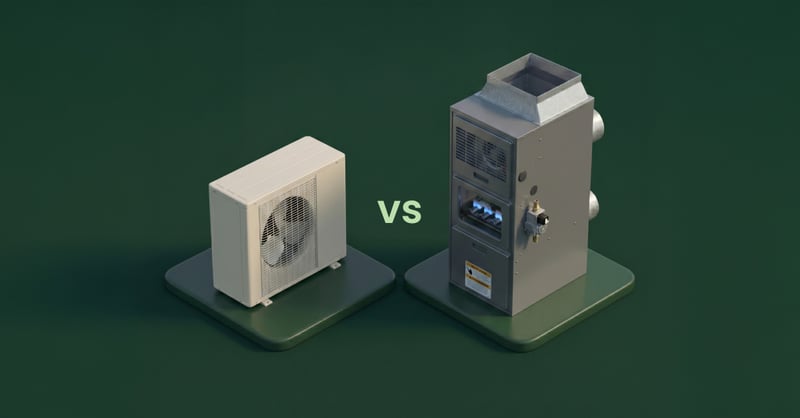
Both systems move heat rather than generate it, but they draw from different sources. Air source heat pumps pull from outdoor air, while ground source heat pumps pull from the earth. That distinction matters in cold climates: outdoor air temperature fluctuates significantly in winter, making air source systems work harder when you need heat most. The earth, by contrast, stays at a relatively stable temperature year-round, allowing ground source systems to operate more consistently.
|
Feature |
Ground Source Heat Pump |
Air Source Heat Pump |
|
Efficiency |
300–600% |
300–400% |
|
Upfront Cost |
$25,000–$40,000 |
$6,300–$30,000 |
|
Space Required |
Yes (especially horizontal) |
Minimal outdoor space |
|
Installation |
Drilling/trenching required |
Less disruptive |
|
Lifespan |
20–25 years |
10–15 years |
Geothermal vs. furnace and central AC
Unlike a furnace, a geothermal heat pump requires no fuel - no gas, no oil, no propane. It runs on electricity and draws its energy from the stable temperature of the ground, which means lower operating costs, no combustion emissions, and no risk of fuel leaks that can affect both your bills and your home's air quality. And unlike a central AC system, a geothermal heat pump handles both heating and cooling in a single unit, eliminating the need for separate systems.
Is a geothermal heat pump right for your home?
Geothermal heat pumps aren't the right fit for every property, but they're an excellent choice for many American homeowners. A ground source heat pump is likely a good fit if:
- You have sufficient outdoor space - particularly important for horizontal loop systems
- Your home is well insulated - heat pumps work most efficiently in homes that retain heat well
- You're planning to stay long-term - with a payback period of 3–10 years, you'll want time to recoup the upfront investment
- You want to reduce your carbon footprint - GHPs produce no direct emissions and pair well with solar panels
- You're in an area with high heating and cooling costs - the efficiency gains are most impactful where energy bills are high
If your home is small and older with poor insulation, or you're not planning to stay put for several years, an air source heat pump may be a more practical starting point. You can learn more about the difference between air source and ground source heat pumps here.
FAQs
What is a ground source heat pump?
A ground source heat pump is a heating and cooling system that uses the stable temperature of the earth to regulate your home's climate. It circulates fluid through underground pipes to transfer heat in or out of your home depending on the season.
How does a ground source heat pump work?
In winter, fluid circulating through underground pipes absorbs heat from the earth and carries it inside, where a heat exchanger transfers it to your home's heating system. In summer, the process reverses - heat from inside your home is transferred to the cooler ground.
How long do ground source heat pumps last?
Ground source heat pumps typically last 20–25 years, significantly longer than a conventional furnace (15–20 years) or air source heat pump (10–15 years). The underground loop system can last considerably longer - often 50 years or more with minimal maintenance.
Do ground source heat pumps work in cold weather?
Yes. Because they draw heat from the ground rather than the air, ground source heat pumps maintain consistent efficiency even in very cold climates. Ground temperatures below the frost line remain stable regardless of outdoor air temperature, making GHPs well-suited for cold-weather states.